
Sen. Dr. Jeff Gordon Calls for More Tax Relief as Connecticut Projects Another BIG Budget Surplus
October 7, 2026
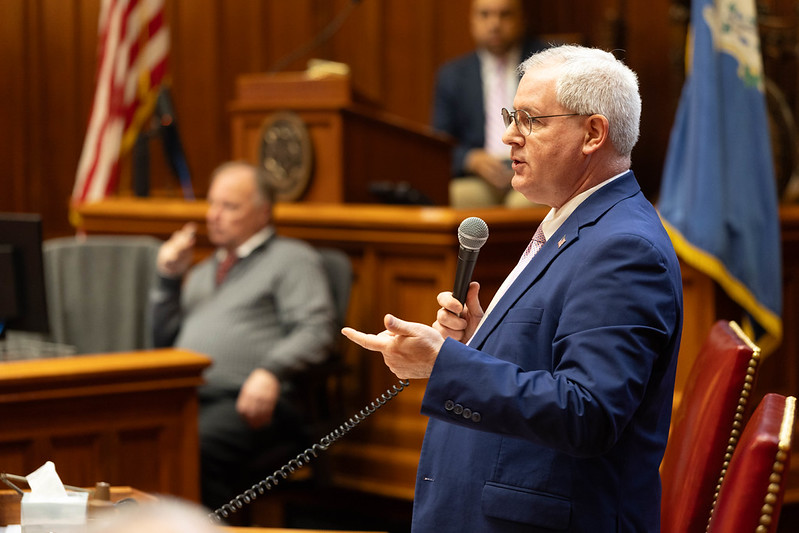
HARTFORD, CT – In response to the state expecting yet another year of big budget surpluses and maintaining record huge money reserves, State Senator Jeff Gordon (R – Woodstock) is again calling for additional tax relief for Connecticut residents, families, seniors, and small businesses.
Sen. Gordon made the following remarks:
Connecticut taxpayers are entitled to keep asking a straightforward question: If state finances are producing large surpluses and record reserves year after year, then why are hard-working people, their families, seniors, and job-creating small businesses still being asked to send so much of their hard-earned money to Hartford?
Sen. Gordon cited some of the steps that have been taken to provide relief: income tax cuts, expanded tax exemptions for retirement accounts and pensions, child and caregiver tax credits, and early education and daycare funding.
But more needs to be done to help people. This is the time to do it.
Connecticut closed fiscal year 2026 with another surplus, and the state is projecting a $380 million General Fund surplus for fiscal year 2027, along with a $209.6 million surplus in the Special Transportation Fund. The state also has a record-high $4.5 billion Rainy Day Fund.
Those numbers demonstrate that Connecticut has meaningful fiscal resources. They also provide an opportunity to give taxpayers more breathing room.
It’s your money. You deserve to keep more of it.
Connecticut should use its strong fiscal position to pursue a broad-based tax relief agenda that puts money back into the hands of the people and businesses who earned it.
That means:
- Further reducing Connecticut’s state income tax so working families can keep more of every paycheck. This includes the middle class.
- Phasing out taxes on retirement and pension income, giving Connecticut seniors greater financial security to stay in Connecticut.
- Reducing Connecticut’s expansive sales tax burden, particularly on everyday purchases that place a disproportionate strain on families and consumers.
- Suspending the state’s gasoline and diesel taxes, providing immediate relief to people, truckers, contractors, farmers, and small businesses facing high transportation costs.
Taxpayers are reasonably asking when Connecticut will do more.
“I’m proud to have worked collaboratively to do more, and the results show it,” Sen. Gordon said. “I’m continuing to work on affordability issues.”
The state’s fiscal guardrails have helped build substantial reserves and reduce debt and pension liabilities. State officials point to those achievements as evidence of improved fiscal stability.
“Republicans got those guardrails in place in 2017,” Sen. Gordon stated. “That progress should not simply become a justification for maintaining a permanently large tax burden on people or limiting support for more public education and municipal funding that can help our towns lower property taxes. We have taken good steps in that better direction to do more.”
Fiscal responsibility should include responsibility to the taxpayers.
Families are balancing mortgages and rent, groceries, utility bills, insurance, school, health care, and transportation costs. Small businesses are dealing with payroll, energy, supplies, and regulatory costs in an increasingly competitive marketplace.
“When government has more revenue than it needs to meet its obligations, pay down debt, and maintain prudent reserves, taxpayers should be put first,” Sen. Gordon said.
The goal is a sustainable Connecticut that controls spending and spends smartly, supports essential services, maintains responsible reserves, pays down debt, and allows residents and employers to retain more of what they earn and save.
Connecticut taxpayers have done their part. Now it is time to continue the work already done to give them more of their money back.