
Sen. Berthel, Tribal Nations & Advocates Raise Voices for Missing & Murdered Indigenous Persons
May 2, 2026
Watch Sen. Berthel’s remarks here.
HARTFORD – State Sen. Eric Berthel (R-Watertown) on May 1 led a commemoration of Missing and Murdered Indigenous Persons Day (MMIP) as part of Connecticut’s annual event at the State Capitol to recognize the high rates of assault, abduction, and murder of Native American tribal nation members.
MMIP is observed annually on May 5 to honor victims, support families, and raise awareness of the high rates of violence against Indigenous people. Established in 2017, this day of advocacy addresses the crisis of Native women and girls who are missing or being murdered at disproportionate rates. The 32nd Senate District is home to hundreds of Golden Hill Paugussett and Schaghticoke tribal nation members.
Members of these tribal nations as well as those from the Eastern Pequot and Mashantucket Pequot tribal nations participated in the commemoration.
“Each year, we reserve this solemn day to raise awareness for missing and murdered indigenous persons and learn about this social and civil rights tragedy that must be addressed,” said Sen. Berthel. “Connecticut has joined the National Day of Awareness to honor victims and extend support for the families impacted by these tragedies. Our state has benefitted so much from our Tribal Nations and it’s important that we continue to recognize the injustices happening to indigenous persons and act.”
This annual event at the State Capitol has grown in scope each year. The idea was formed in 2023 when Sen. Berthel recognized a Watertown constituent who is a Native Cherokee on the Senate floor to raise awareness for “Red Dress Day,” the symbol of the lost lives of indigenous women at the hands of violence.
This year’s event began with a Flute Honoring Song, concluded with a Red Dress Song, and included a “Red Dress” display, which is a series of empty red dresses.
Native American and Alaska Native rates of murder, rape, and violent crime are all higher than the national averages, and Native American and Alaska Native women make up a significant portion of missing and murdered individuals.
For decades, Native American and Alaska Native communities have struggled with high rates of assault, abduction, and murder of tribal members. Community advocates describe the crisis as a legacy of generations of government policies of forced removal, land seizures and violence inflicted on Native peoples.
A 2016 study by the National Institute of Justice (NIJ) found that more than four in five American Indian and Alaska Native women (84.3 percent) have experienced violence in their lifetime, including more than half who have experienced sexual violence. Overall, it’s estimated more than 1.5 million American Indian and Alaska Native women have experienced violence.
Congress responded in part in 2020 with the “Not Invisible Act,” which brought together law enforcement, tribal authorities, federal partners, and others to study solutions to the crisis of murdered and missing Indigenous women and to establish better systems of coordination. The Act created a new position within the Interior Department dealing specifically with murder, trafficking, and missing Native Americans, and it appointed the federal Bureau of Indian Affairs to coordinate prevention efforts, grants, and programs relating to murder of, trafficking of, and missing Native Americans, across various federal agencies.
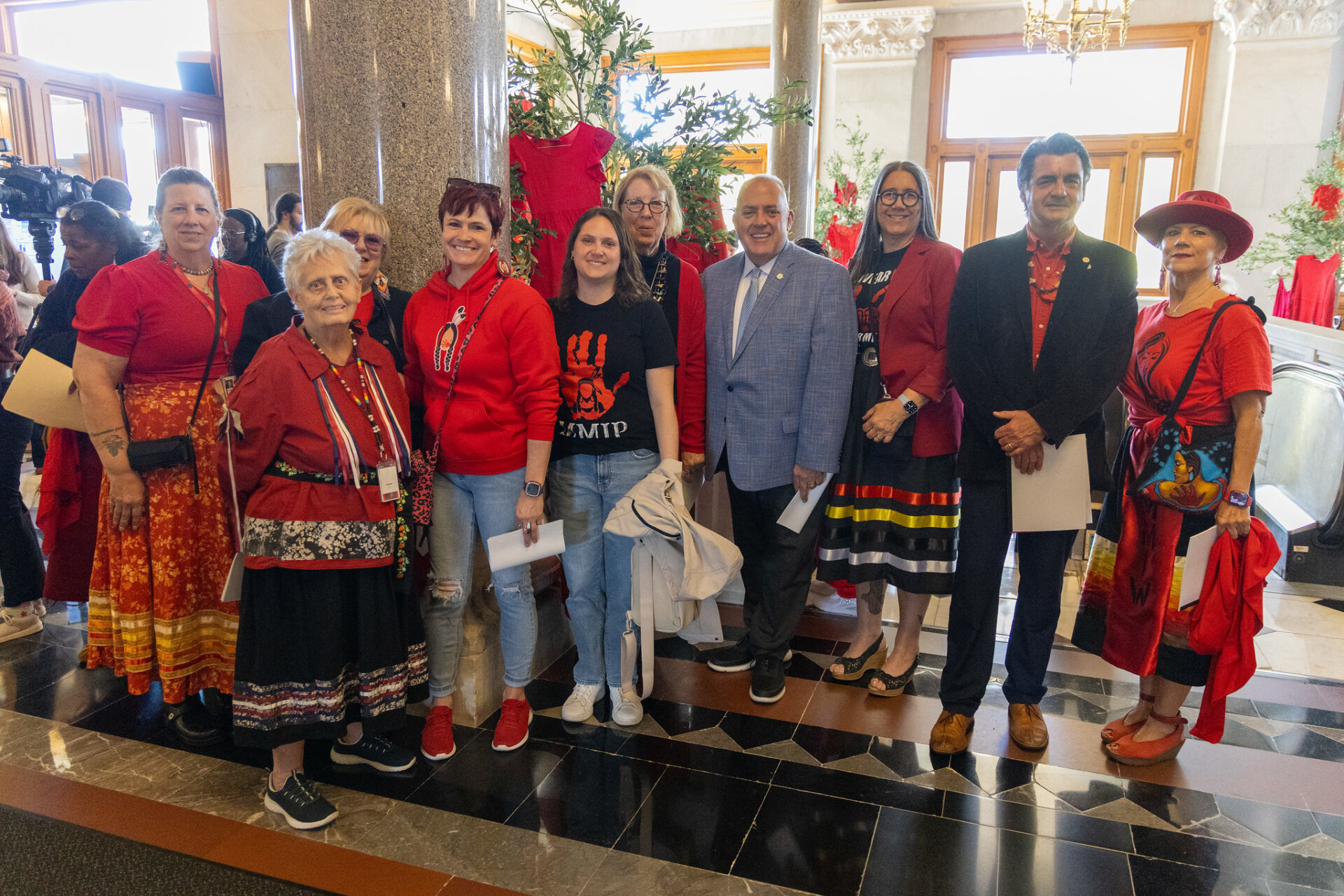
Photo above:
Sen. Eric Berthel and Sen. Cathy Osten join tribal nation advocates at the State Capitol to commemorate Missing & Murdered Indigenous Persons Day on May 1.