
Senator Tony Hwang Testifies Before Public Safety & Security Committee in Support of Cybersecurity Legislation
March 11, 2026
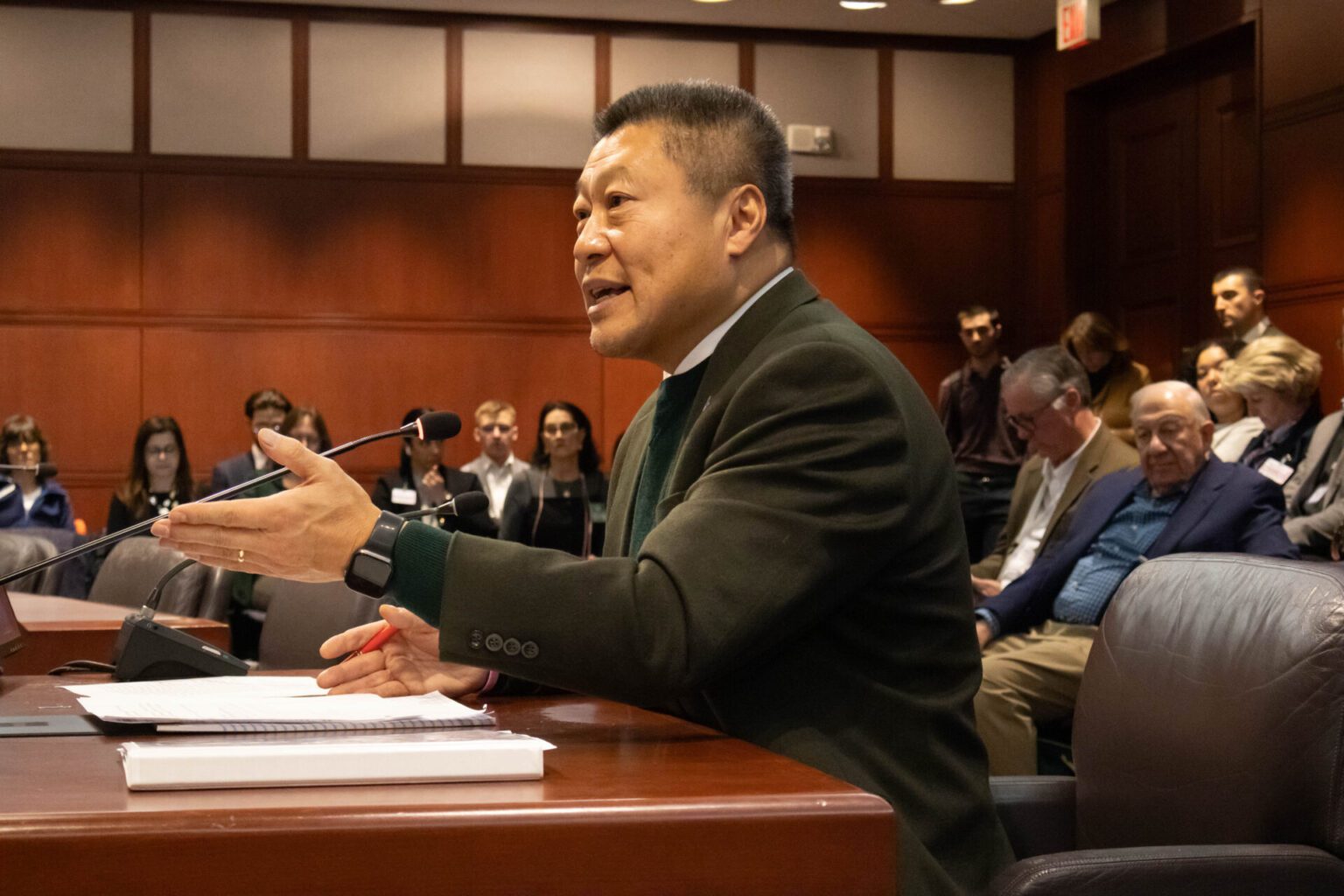
HARTFORD, CT—State Senator Tony Hwang (R—Fairfield) appeared before the Connecticut General Assembly Public Safety and Security Committee to testify in support of SB 403, An Act Concerning Cybersecurity, legislation aimed at strengthening protections for sensitive personal and operational data in Connecticut.
During his testimony, Senator Hwang stressed that cybersecurity threats have grown more complex and more frequent, making it essential for both government and private organizations to adopt modern security standards. The legislation incorporates core cybersecurity protections consistent with the framework developed by the National Institute of Standards and Technology (NIST), including requirements for patch management, encryption, secure backups, and incident recovery procedures.
“Cybersecurity is no longer simply an IT issue. It is a matter of public safety, economic stability, and protecting the personal information of Connecticut residents,” said Hwang. “The standards outlined in SB 403 reflect widely accepted practices that many major institutions and companies already use to protect critical systems and sensitive information. These are the accepted practices used across modern cybersecurity programs. By encouraging the adoption of these standards, we can help ensure organizations operating in Connecticut are better prepared to prevent and respond to cyber incidents.”
Senator Hwang also emphasized the importance of timely reporting requirements included in the bill. SB 403 requires organizations to report cybersecurity incidents within seventy-two hours, a step he described as necessary to ensure rapid response when sensitive information may be at risk.
“Timely reporting is critical,” Hwang said. “While public companies currently disclose cybersecurity incidents within four days through filings with the U.S. Securities and Exchange Commission, this legislation ensures that state authorities can respond more quickly when the personal information of Connecticut residents or critical services could be affected.”
The discussion before the committee also included the growing threat of ransomware attacks and the importance of improving awareness and education around these risks. Senator Hwang pointed to recent cyber incidents affecting municipalities in Connecticut as evidence that local governments must be part of the state’s cybersecurity strategy.
“Ransomware attacks are increasingly targeting public institutions and local governments,” Hwang said. “Ensuring that organizations understand these threats and have strong protections in place is essential to preventing disruptions to services and protecting sensitive data. We must ensure that our municipalities have a seat at the table and a meaningful role in this process. Recent incidents impacting cities like Meriden and New Britain show that local governments are often on the front lines of cyber threats.”
In addition, Senator Hwang voiced support for whistleblower protections included in the legislation, which would shield cybersecurity professionals from workplace retaliation if they report failures to meet required security standards.
“These protections help build a culture of accountability,” Hwang said. “Cybersecurity professionals must feel confident that they can raise concerns about vulnerabilities or failures without fear of retaliation.”
The bill also calls for the creation of a State Cybersecurity Intelligence Task Force to strengthen coordination among subject matter experts and state agencies. Senator Hwang noted that he has previously advocated for, and passed in Special Act 23-23, the creation of a cybersecurity task force and welcomed the collaborative structure outlined in the legislation. He also noted the collaboration between agencies like DESPP and their extensive knowledge of these issues as critically important.
“A coordinated approach is essential to identifying risks and responding effectively to threats,” Hwang said. “By bringing together experts and state agencies, we can strengthen Connecticut’s overall cybersecurity preparedness.”
Senator Hwang concluded his testimony by urging the committee to advance the legislation.
“SB 403 represents a proactive step toward strengthening Connecticut’s cybersecurity laws and ensuring responsible security practices across both the public and private sectors,” Hwang said. “I respectfully urge the committee to support this important legislation.”