
(Watch) CT House & Senate GOP Call for CT Government’s ‘Candy Store’ to Close
February 19, 2026
House & Senate Republicans Call
for CT Government’s ‘Candy Store’ to Close
Unveil Anti-Corruption, Accountability Solutions to Combat Waste, Fraud and Abuse
(Watch the press conference here.)
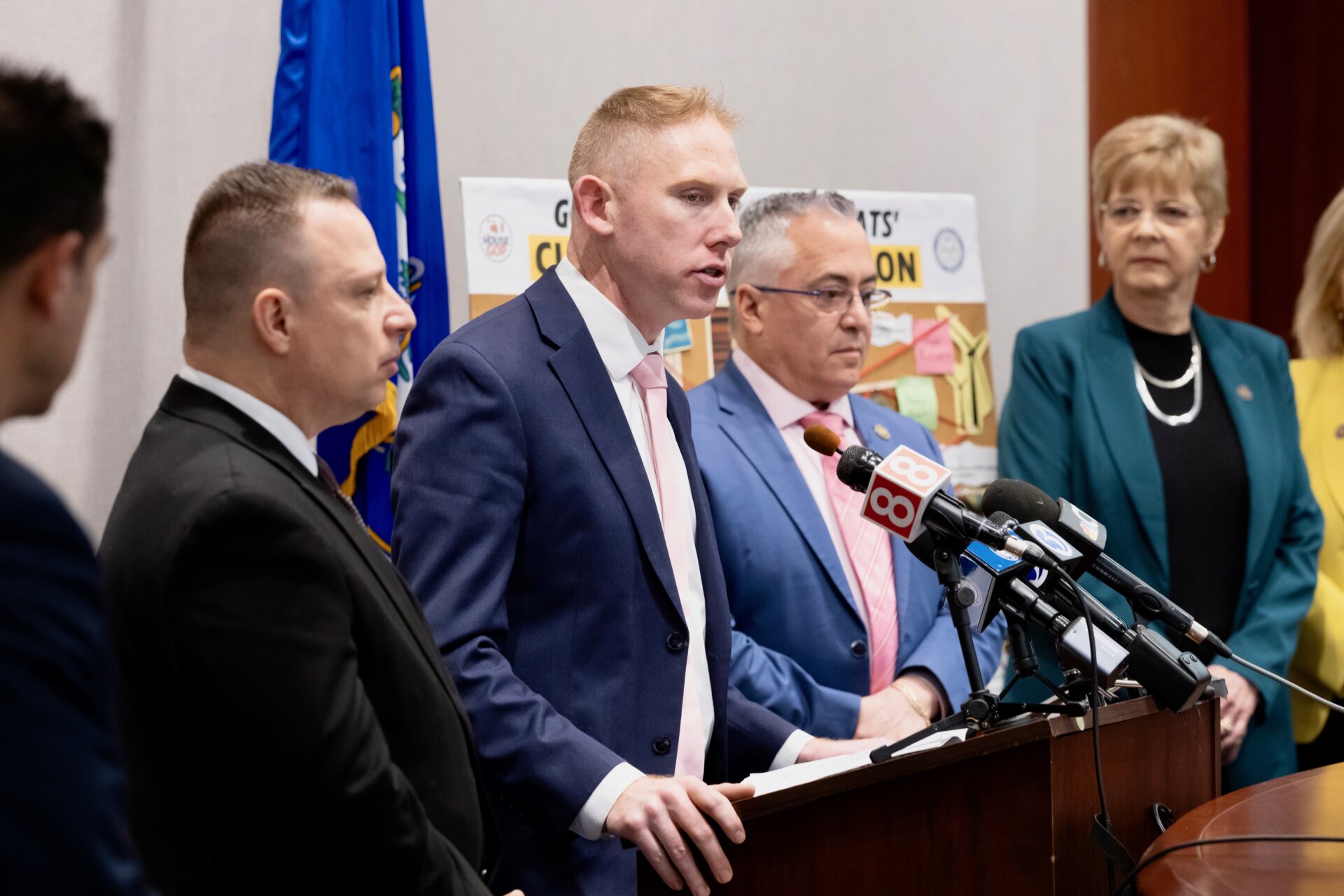
Saying that “Connecticut government’s ‘Candy Store’ must close,” Senate and House Republicans today unveiled legislative proposals aimed at delivering accountability, preventing fraud and waste, and rooting out what they call a “culture of corruption” in state government.
House and Senate Republican Leaders Vincent Candelora (R-North Branford) and Stephen Harding (R-Brookfield) highlighted what they described as an ongoing lack of respect for Connecticut taxpayers’ money which in turn makes Connecticut more unaffordable.
“It’s a ‘candy store’ mentality in Connecticut government under one-party rule, and the FBI is watching closely. Meanwhile, our state gets more and more unaffordable. These common sense reforms will shine some much-needed sunlight on how Connecticut taxpayers’ money is being spent and managed. Sick of the scandals, the waste, the fraud and the arrogance? So are we. But this package isn’t just about rooting out corruption—it’s also about closing loopholes, tightening oversight, and making sure that when taxpayer dollars are spent, they’re spent right,” Harding and Candelora said. “We hope our solutions will receive bipartisan support, because they will deliver the transparency, accountability, and good government that Connecticut taxpayers deserve.”
Republicans are proposing the following anti-corruption legislative reforms:
Establish Standards for Third-Party Funding Recipients, Vetting for Bonding and Budget Requests
- Require all budget and bonding earmark requests to be publicly linked to the legislator or organization making the request before funds are granted, including a certification that the requesting legislator, their family members, or any associated business has no financial interest in or will benefit from the grant.
- Mandate that organizations receiving state budget funds or bond funds disclose how money will be spent, including the share dedicated to administration versus programming, the number of people served, program goals and progress, and a detailed Return on Investment (ROI) analysis.
- Require financial statement filings, a full accounting of all income sources and disbursements, disclosure of any officer or board member convictions related to financial crimes or fiduciary breaches, and full disclosure of any close associations with current legislators, government staff, or other elected officials.
- Require that when grant recipients pass funds to third-party or subsequent recipients, those recipients must identify all such parties, the specific amounts granted, and be bound by the same transparency and reporting requirements as the original recipient.
- Direct state agencies responsible for disbursing these funds to report annually on fund status and usage, and subject grant recipients to random state audits to verify funds are used as intended.
Establish an Office of Inspector General (Civil)
- Will investigate fraud, waste and abuse in the expenditure or use of state resources.
- Review Auditors’ reports on Agencies and investigate findings of fraud, waste and abuse.
- Intake complaints, including from whistleblowers.
- Seek civil recovery of funds.
- Refer cases to state/federal authorities.
Strengthen Oversight and Empower the State Auditors
- Require physical site visits for housing and human services providers receiving $25,000 or more in state funds
- Set performance and accountability standards in order for state agencies to be able to renew contracts
- Require additional review of findings identified in audits where only a sample of transactions were reviewed
- Grant subpoena power to the Auditors of Public Accounts.
Restore the bipartisan Legislative Program Review and Investigations Committee
- Connecticut once had a powerful, bipartisan watchdog committee that held state government accountable — independently investigating agency performance and uncovering waste and mismanagement.
Treasurer Fiduciary Reform
- Establish an Investment Board to share fiduciary responsibility with the state treasurer for state investment.
Housing Funding Reform
- Require the Department of Housing (DOH) to identify specific projects and terms of any agreements to the state Bond Commission prior to receiving allocations of state bond funds.
- Require DOH and CHFA to compile and report dollars loaned and leveraged for housing projects and the process and “scorecard” for each project that led to an award.
Require FOIA/UAPA training for PURA Commissioners and Staff
- Requiring commissioners and staff to undergo training on the Freedom of Information Act and the Uniform Administrative Procedure Act — the laws governing public records and agency conduct — ensures those entrusted with regulating Connecticut’s utilities follow the rules.
Deposit volatility funds in a timely matter
- Connecticut’s volatility cap fund exists to protect taxpayers. Recent actions by the State Treasurer to withhold the deposit of these funds exposed a dangerous loophole. Require the Treasurer to deposit volatility funds within 30 days, ensuring these reserves are managed with integrity.
Provide House and Senate minority leaders appointments to Siting Council