
Sen. Sampson: Farmers Should Not Be Punished by State Tax Policy
January 14, 2026
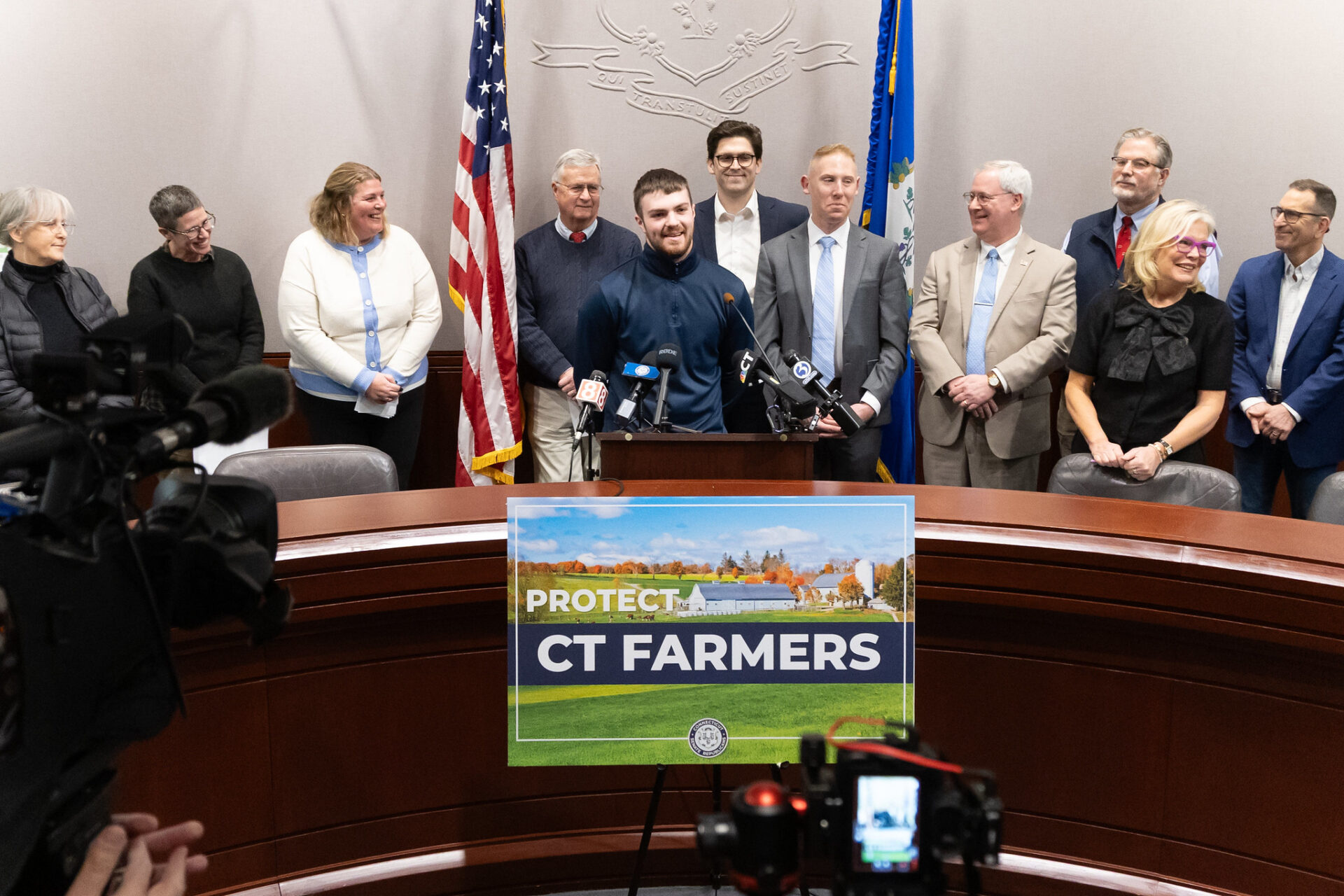
HARTFORD — State Sen. Rob Sampson (R-16) today expressed his support for Connecticut farmers who raised concerns at a press conference held at the State Capitol regarding recent changes to how farmland is assessed, warning that the updated valuations could result in significant property tax increases for farmers across the state.
Under state law, farm, forest, and open space land is assessed based on its use value rather than fair market value. Every five years, the State of Connecticut updates these use values. Last month, the state announced substantial increases to several categories of farmland, raising alarm among farmers and landowners.
One of the most dramatic changes involved swamp land, which saw its assessed value jump from $40 per acre to $970 per acre. Following widespread concern from farmers and lawmakers, the state revised the schedule and eliminated the increase for swamp land. However, other land categories remain subject to significant valuation increases, which could still lead to major tax hikes for farmers.
Amidst public complaints from farmers and the lawmakers, the state recently revised the schedule, eliminating the increase to swamp land. But some land categories still face significant tax spikes. (click here to view the chart.)
“Connecticut farmers play a critical role in our economy, our food supply, and the preservation of land,” said Sen. Sampson. “Imposing sudden and excessive tax increases through a flawed assessment process puts family farms at risk. The state must pursue policies that are transparent, data-driven, and respectful of the people who steward this land.”
Concerns have also been raised about the methodology used to calculate the updated assessments. The state relied on survey data that produced a low response rate of approximately 4 percent, and data collection methods differed from prior years. These issues have led farmers to question the accuracy and transparency of the valuation process.
Sen. Sampson emphasized the importance of reforming the review process to ensure farmers are included and that future assessments are based on reliable, transparent data.
“State government has a responsibility to get this right,” Sen. Sampson added. “Protecting farmland means protecting food security, local economies, and property rights. I will continue advocating for reforms that provide farmers with stability, predictability, and a real voice in the process.”
More information and an online petition addressing the farmland assessment changes can be found at www.SaveCTLand.org.