
Sen. Martin Stands with Local Farmers to Oppose Major Tax Hikes
January 14, 2026
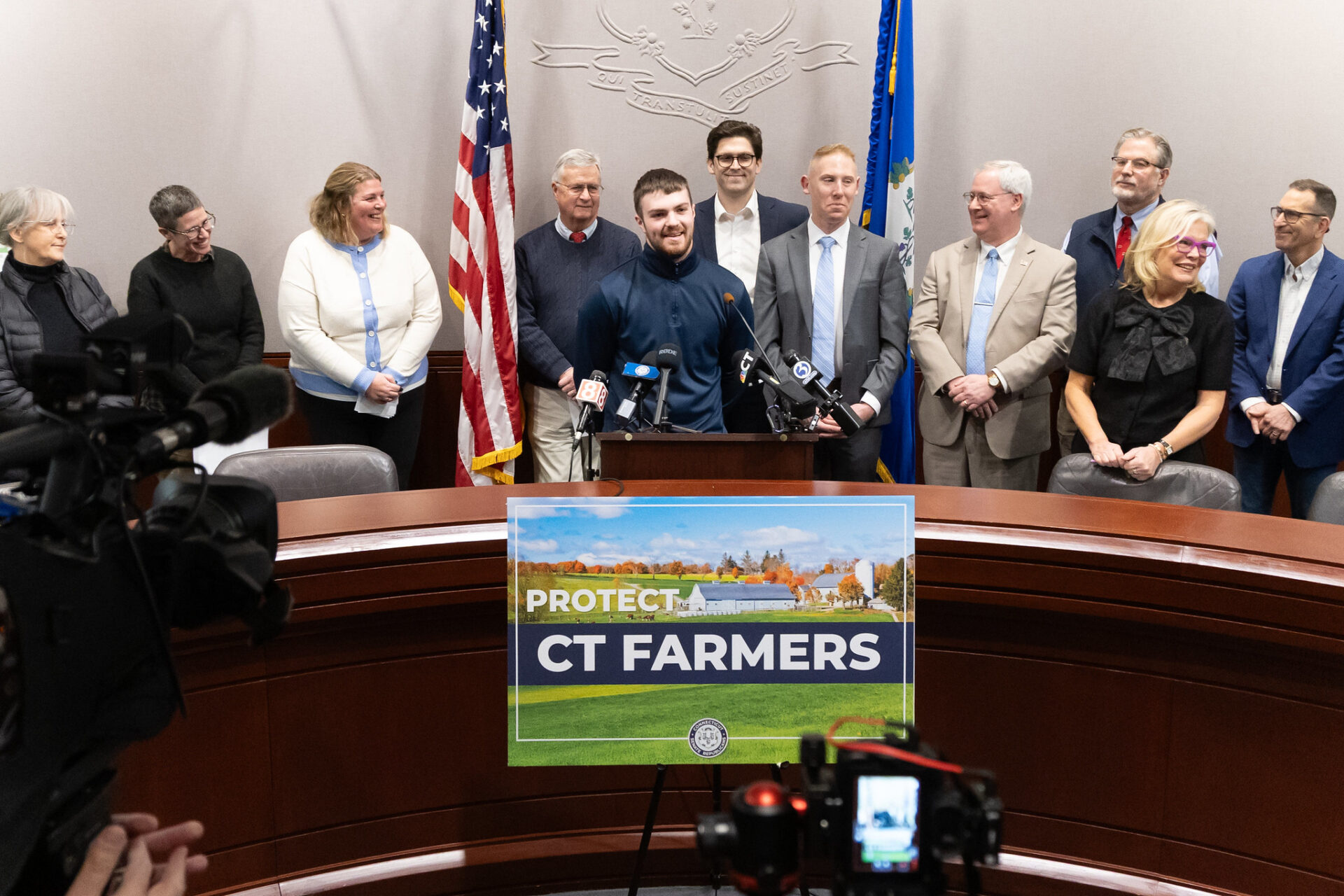
Sign the Petition at: www.SaveCTLand.org
Senate Republican Leader Pro Tempore Henri Martin (R-Bristol) today echoed Republican support for Connecticut farmers who are facing major tax increases following changes to how state farmland is assessed.
State law (Public Act 490) sets the assessment value for farm, forest and open space property at the use value as opposed to fair market value. Every five years, the values are adjusted by the State of Connecticut.
Last month, the state announced considerable increases to the values of most types of Public Act 490-eligible land, with the most significant increase being the value of swamp land. This valuation for Connecticut swamp land went from $40 an acre to $970 an acre.
Amidst public complaints from farmers and the lawmakers, the state recently revised the schedule, eliminating the increase to swamp land. But some land categories still face significant tax spikes. (Click here to view the chart.)
“Farmers have played a vital role in our district and in our state. Many farms have been here for generations. They’re now facing crippling, unexpected tax increases on certain categories of land. This reassessment puts their entire operation, and our state’s agriculture industry, in jeopardy. I am urging that their voices be included in a reformed land assessment process,” said Senator Martin.
He and Republican lawmakers will push for farmer representation in the review process. They want farmers included on a committee to provide input on assessment changes. The Connecticut Department of Agriculture has acknowledged the need to make changes to how future land values are determined.
Senator Martin noted that he shares farmers’ continued questions regarding the state’s methodology and the survey data, which appears to be arbitrary and lacking evidence. The state’s data collection methods differed from prior years and led to a very low response rate (4.02% of mailed surveys), which significantly impacted the schedule.
Some of the methodological choices included flipping the values for different land types based on responses that the state thought were illogical. The ability of the state to revise the schedule with no changes to the data that they collected have raised concerns among farmers about how the program is operating.
A newly created online petition can be viewed and signed at www.SaveCTLand.org.