
Senator Tony Hwang Hosts Public Forum on State Housing Mandates, Transparency Concerns, and Local Impacts
December 23, 2025
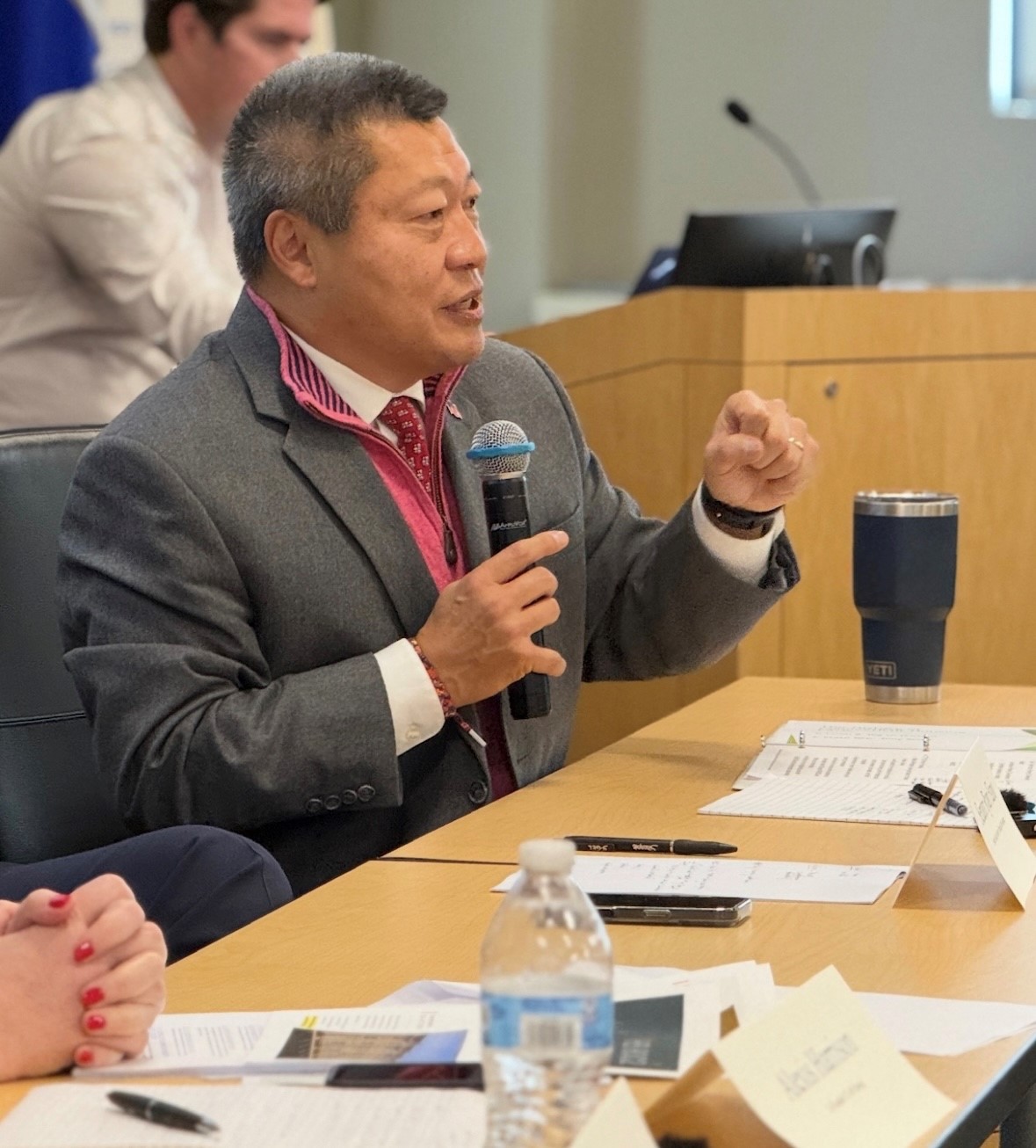
FAIRFIELD, CT—This past weekend, State Senator Tony Hwang (R–Fairfield) convened a public legislative forum to examine the far-reaching impacts of Connecticut’s new housing mandates and the state’s affordable housing law, discussing local control, infrastructure funding, and the lack of transparency surrounding the passage of HB 8002 during a special legislative session. Senator Hwang previously served as Co-Chair of the General Assembly’s Housing Committee, as well as Ranking Member of the Planning and Development Committee, of which he is still a member.
The event, “Overdevelopment & Affordable Housing: A Legislative Update,” provided residents, municipal leaders, land-use officials, and community advocates with a detailed overview of CGS 8-30g, the newly enacted housing law, and their combined effects on zoning, school construction, environmental protections, transportation, and public safety.
Senator Hwang moderated an expert panel discussion followed by an audience Q&A. He was joined by State Senator Ryan Fazio (R—Greenwich) and State Representative Tony Scott (R—Monroe), who participated in the discussion and engaged with attendees.
“One of the most troubling aspects of HB 8002 was not just its substance, but the process by which it became law,” said Senator Hwang. “This sweeping policy was advanced and passed during a special session with limited public notice, minimal opportunity for municipal input, and without the level of transparency that communities deserve when decisions of this magnitude are being made.”
Throughout the forum, Senator Hwang emphasized that state housing policy must balance the need for affordable housing with the realities facing towns and cities—including aging infrastructure, needed school improvements, traffic congestion, environmental constraints, and fiscal impacts on local taxpayers.
A key portion of the discussion addressed the “opt-in” framework contained in HB 8002. While characterized as voluntary, panelists and legislators explained that a municipality’s decision not to opt in may carry significant consequences, including jeopardizing eligibility for state funding for school construction and infrastructure projects and potentially affecting access to 8-30g moratorium protections.
“When a so-called opt-in policy is tied to funding for schools, roads, sewers, and public safety, communities deserve to clearly understand the stakes,” Senator Hwang said. “That is not a free choice, and towns should not be forced into compliance under threat of losing funding for critical resources.”
“The passage of HB 8002 undermined local control of decision making in a historic fashion. But that does not mean this is the end. We must continue to push back and work to change it and protect our communities and neighborhoods,” said Sen. Fazio. “Thank you to Senator Hwang for hosting this event. Conversations like this are essential to ensuring that Connecticut residents have a voice that is reflective of local needs.”
“There was a lot to absorb in the November housing bill (HB 8002), even though most of it was taken directly from the vetoed June housing bill (HB 5002). It’s helpful to get out in the community to talk with people about exactly how their neighborhoods will be impacted by decisions made in Hartford,” said Rep. Scott. “Reforms are needed to state housing regulations, but what was passed this year doesn’t get to the heart of the issue. To make a big difference, 8-30g should be revised or repeal.”
The forum also provided guidance on how municipalities can engage constructively with the Office of Policy and Management (OPM) and their Regional Councils of Governments (COGs) to advocate for flexibility, data-driven planning, and solutions that respect local conditions while meeting genuine housing needs.
“Affordable housing can and should be achieved without overwhelming local infrastructure, compromising neighborhoods, or sacrificing public safety,” Senator Hwang added. “But that requires honest collaboration, clear rules, and a transparent legislative process, not top-down mandates rushed through without meaningful public engagement.”
The event was held Saturday morning at the Fairfield Regional Fire School and was free and open to the public. Residents, local officials, and members of land-use boards and commissions from Fairfield and neighboring communities attended.
Senator Hwang reaffirmed his commitment to continued public dialogue and legislative oversight to ensure state housing policies are fair, transparent, and respectful of local voices.
Full Video: https://youtu.be/XLL-n0UAFhI